Email Us:
info@socialflying.com.au
Please Call:
02 7228 0320

Please Call:
02 7228 0320
Email Us:
info@socialflying.com.au
Please Call:
02 7228 0320
Please Call:
02 7228 0320
FLY THE COAST OF SOUTH AUSTRALIA
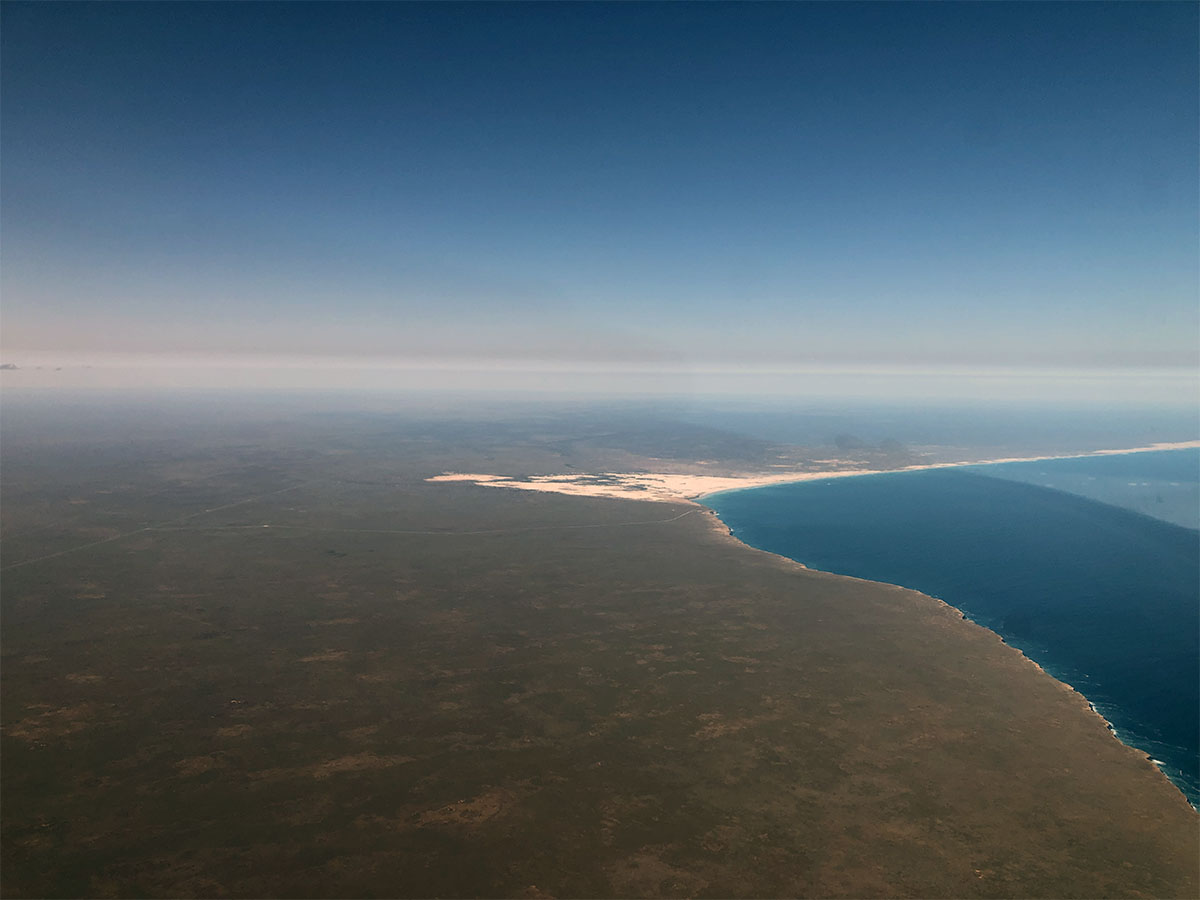
The surging Southern Ocean shapes the coastline of South Australia. It starts with long white sandy beaches in the southeast, Kangaroo Island and the rugged Eyre Peninsular in its center, and finishes with 100 kilometers of the world’s longest continuous sea cliffs by the border of Western Australia.
There is no better way to see this than from the comfort of your light aircraft, with your journey finishing up in Clare, to enjoy a sumptuous banquet at the renowned Watervale Hotel.
Video of the 2025 Great Australia Bight Air Safari
Inclusions
– Seven nights of quality accommodation at Port Fairy, Kangaroo Island, Flinders Island, Eucla, and Clare.
– All airfield transfers
– Five breakfasts at Kangaroo Island, Flinders Island and Eucla
– Four lunches at Kangaroo Island, Flinders Island and Eucla
– All dinners
– Full day tour exploring the south west coast of Kangaroo Island that includes Seal Bay, Vivonne Bay, and the Flinders Chase National Park.
– Visit to the Eucla Telegraph Station ruins
Book with confidence: If you cannot travel, Sydney Social Flying will assist you with a date change, provide you with a credit, or process a refund for your booking less any non-recoverable costs.
The itinerary document for the 2026 Great Australia Bight Air Safari will be published by the end of June.
To register your interest please contact:
☎ 02 7228 0320
DAY ONE, Saturday, November 14
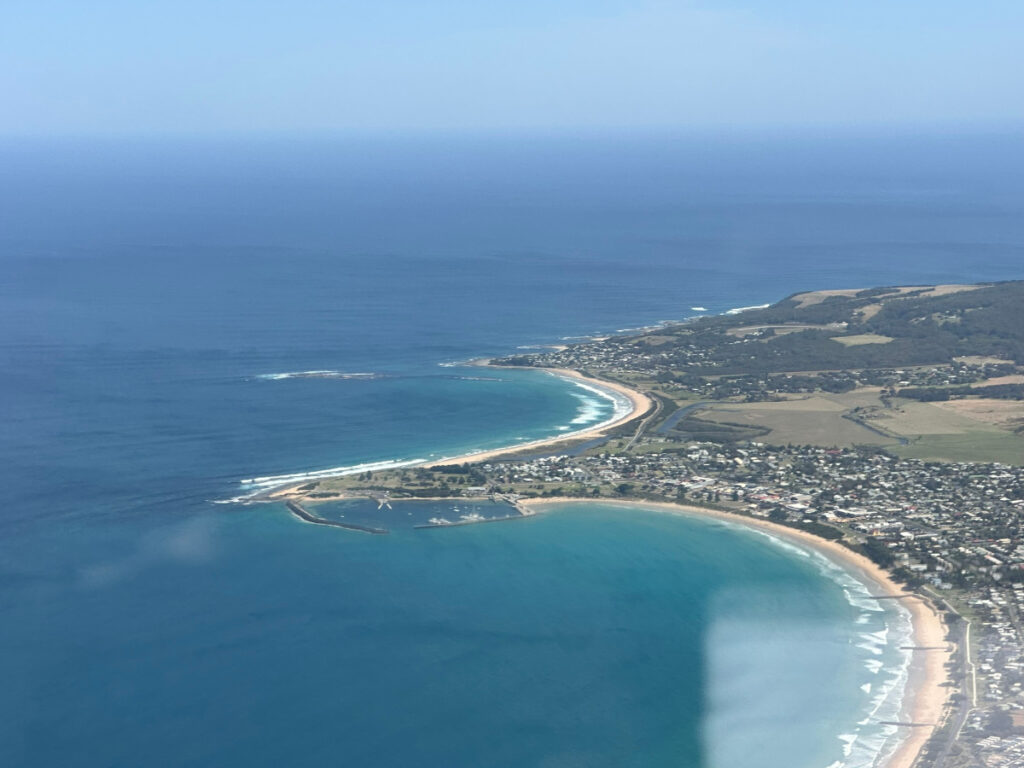
The Safari starts at Port Fairy, with its nineteenth-century Whaling and Sealing heritage. Located on the southwest coast of Victoria, many of Port Fairy’s early buildings remain. This includes Victoria’s oldest continuously licensed hotel, The Caledonian Inn, “aka The Stump”, which dates back to 1844.
If you get there early, find time for a stroll on one of the walking trails. The museum on the Moyne River is worth visiting, along with plenty of choices of cafés and bars, plus several art galleries and studios.
DAY TWO, Sunday, November 15
Sed ut perspiciatis unde omnis iste natus error sit voluptatem accusantium doloremque laudantium, totam rem aperiam, eaque ipsa.
Sed ut perspiciatis unde omnis iste natus error sit voluptatem accusantium doloremque laudantium, totam rem aperiam, eaque ipsa quae ab illo inventore veritatis et quasi architecto beatae vitae dicta sunt explicabo.
DAY TWO, Sunday, March 1
If not seen on arrival, a 30-mile backtrack takes you to the twelve Apostles. The scenic route to Kangaroo Island, is to just follow the beautiful beaches with their adjacent crystal-clear waters.
Passing the mouth of the Might Murray River, just before Goolwa, which is a good place for fuel if required, you overfly the Fleurieu Peninsula, before arriving Kangaroo Island.
DAY ONE, Saturday, February 28
The Safari starts at Port Fairy, with its nineteenth-century Whaling and Sealing heritage. Located on the southwest coast of Victoria, many of Port Fairy’s early buildings remain. This includes Victoria’s oldest continuously licensed hotel, The Caledonian Inn, “aka The Stump”, which dates back to 1844.
If you get there early, find time for a stroll on one of the walking trails. The museum on the Moyne River is worth visiting, along with plenty of choices of cafés and bars, plus several art galleries and studios.
DAY THREE, Monday, March 2
Today’s tour goes to the far southwest of Kangaroo Island to the Flinders Chase National Park. Here, you can see the Cape du Couedic Lighthouse, the surreal shapes of the Remarkable Rocks, and the Admirals Arch an impressive rock arch weathered over thousands of years, but also home to a colony of long-nosed fur seals.
On the way, we go to Vivonne Bay, a six-kilometer-long U-shaped beach with crystal-clear shallow water and was once voted Australia’s best beach.
At the nearby Seal Bay, you can observe a colony from an 800-meter boardwalk of Sea Lions. Seal Bay has been their home for thousands of years.
DAY ONE, Saturday, February 28
The Safari starts at Port Fairy, with its nineteenth-century Whaling and Sealing heritage. Located on the southwest coast of Victoria, many of Port Fairy’s early buildings remain. This includes Victoria’s oldest continuously licensed hotel, The Caledonian Inn, “aka The Stump”, which dates back to 1844.
If you get there early, find time for a stroll on one of the walking trails. The museum on the Moyne River is worth visiting, along with plenty of choices of cafés and bars, plus several art galleries and studios.
DAY FOUR, Tuesday, March 3
The route today could first go via Vivonne Bay and Flinders Chase National Park for an aerial view of yesterday’s tour. Following the Spencer Gulf islands, Wedge and Thistle will get you to the Eyre Peninsular, and off its west coast, part of the Investigator Group, is Flinders Island, where we will stop for lunch.
At 3,652 hectares, owned by the Woolford family since 1978, the island was named by Matthew Flinders in his round-Australia voyage in 1802. During the early nineteenth century, Sealing was predominant, although the Island was also a remote Whaling Station.
The Island eventually supported a large Merino flock, and limited wheat growing. The Woolford family commenced destocking in the mid-2000s, allowing native vegetation to regenerate, with the island now an eco-tourism destination.
DAY FIVE, Wednesday, March 4
Today can be spent exploring Flinders Island, with its many beaches and headlands.
DAY SIX, Thursday, March 5
The world’s longest continuous sea cliffs, the Bunda Cliffs, is today’s flying highlight. These limestone cliffs, some 60–120 meters (200–390 ft) in height, are over 100 kilometers long, stretching from the Head of the Bight to the West Australian Border.
Overnight is Eucla, which once housed 26 telegraphists and their families. This was the main station on the East-West Telegraph line, built-in 1875–77, and was the final link in Australia’s telegraph
infrastructure and connected all five colonies. At its peak Eucla was handling 600 telegraphs per day.
The stone telegraph station was built in 1898, replacing the weatherboard station began
operations on 9 December 1877. The Eucla Telegraph Station ceased operation in 1927, and its ruins are slowly disappearing under the encroaching dunes.
DAY SEVEN, Friday, March 6
Reversing the direction from yesterday will provide another opportunity to view the Bunda Cliffs. With the aim to make Clare Valley by around 4 pm. Possible lunch stops for the journey could be Ceduna or perhaps Streaky Bay or Elliston on the west coast of the Eyre Peninsular.
A 4 pm arrival into Clare Valley, should provide plenty of time to settle in, and get ready for the end-of-trip dinner at the renowned Watervale Hotel.
DAY EIGHT, Saturday, March 7
After a hearty breakfast, it is time to say good- bye to your fellow travelers and set off for home.